Teaching and learning sets · Middle and high school · Neurotechnology · Robotics
Age: 12 years and up
Number of lessons: 67
Duration of each lesson: 100 minutes
Internet access required: Yes; offline use is also possible
- Age
12 years and up
- Lessons
67 занятий
- Lesson duration
100 минут
- Equipment
- Цифровой образовательный аппаратно-программный комплекс «Юный нейрофизиолог-инженер» НЕЙРОГАРНИТУРА (работа с сигналами мозга, 40 занятий),
Equipment
- Young Neurophysiologist-Engineer digital educational hardware and software complex with the Neuroheadset for brain-signal activities (40 lessons);
- Young Neurophysiologist-Engineer digital educational hardware and software complex with the Electroheadset for muscle, heart, and photoplethysmography (PPG) signals (40 lessons);
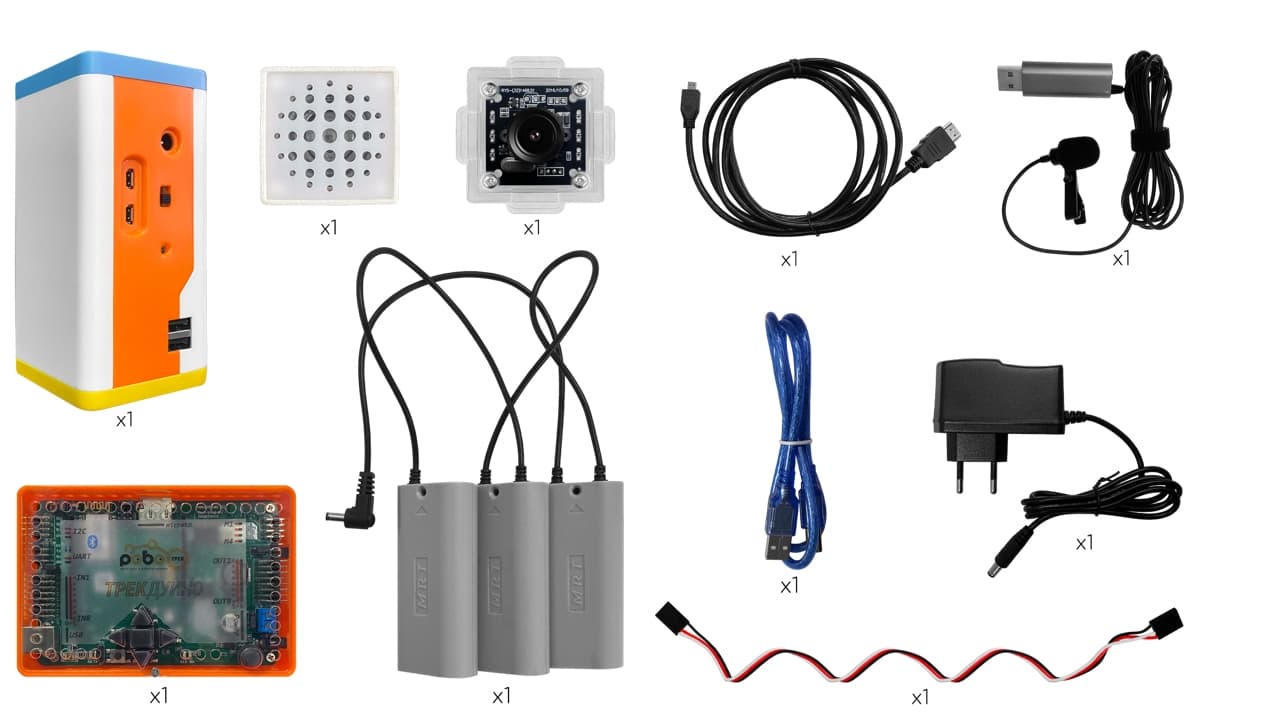
- Robotrack Basic robotics kit;
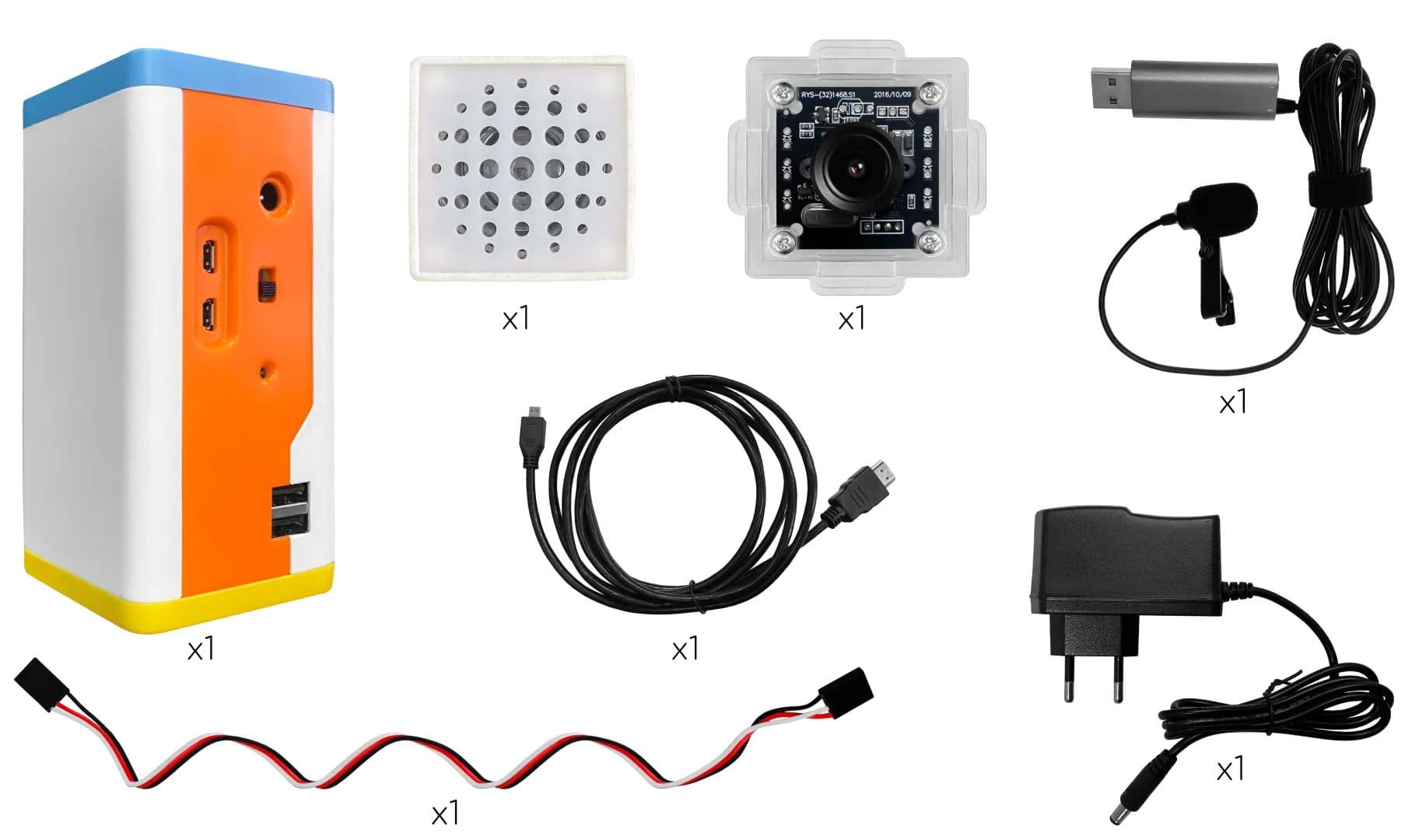
- Sensors, colour TFT touchscreen, three worm gear units, Audiotrek, and Energytrek or Energytrek Mini v2 (resource kit pages in Russian);
- PC.
The course explores the physiology of heart activity and the bioelectrical activity of living organisms, including why and how the heart beats. Students study muscle activity, nerve conduction, the structure and conductivity of skin, and skin resistance. Several lessons introduce the structure and functions of the human brain, its bioelectrical activity, neural networks, and the principles of EEG recording. A strong emphasis is placed on brain rhythms and active mental work.
Students develop skills in creating interactive classifiers and study psychophysiology, human functional state, factors that affect performance, biological feedback, and practical biofeedback training. Other sections introduce modern technologies, including augmented and virtual reality, control in two- and three-dimensional spaces, bionics, neuroprogramming, and brain-computer interfaces.
The final section covers an expert system for comprehensive personality analysis using original methods intended to identify professionally important qualities and support career guidance.
The course includes both theory and several types of laboratory work. Some labs are practical sessions with two parts:
- Neurophysiology research: measuring heart rate, constructing an individual heart axis, studying biorhythms and pulse, skin resistance, muscle bioelectrical activity, and related topics;
- Engineering skills: studying cybernetics through robotics projects and controlling models with heart rate, brain activity, muscle electrical potential, and skin-resistance readings.
Students build or assemble robotic structures and neurotechnology devices to study brain signals and heart structure. They also learn cybernetics and neuroprogramming and create a model of unmanned transport by programming its route.
Some laboratory activities use interactive applications to investigate the human body in more depth. Students can work in an individual notebook and view their lesson notes remotely on portable devices. The course includes a glossary, equipment connection instructions, and visualizations of key processes in the human body.
Course demonstration lesson (in Russian)
Documents
Related products