Brain Development LLC and Robotrack LLC are Russian developers and manufacturers of educational systems for children and young people. The goal of these systems is to build pupils' foundational engineering and technology skills.
Learning is based on practical work: pupils design, assemble, and program real technical systems and robot models. This develops scientific and technical thinking and helps pupils understand technologies used in future careers.
Children can explore robotics, neurotechnology, electrical engineering, mechatronics, programming, and artificial intelligence, and take part in competitions.
Robotics
Pupils start with basic robotics and gradually move on to more complex systems. They learn about the three controllers included in the kits: a non-programmable controller, an entry-level programmable controller, and the multifunctional Trackduino controller. They explore motors, actuators, and sensors such as infrared, light, touch, and sound sensors, remote controls, and piezo buzzers.
Lessons emphasise step-by-step model assembly, correct connections, and sensor programming. Pupils write control algorithms, test their builds, and create their own robotic models, developing project and research skills.
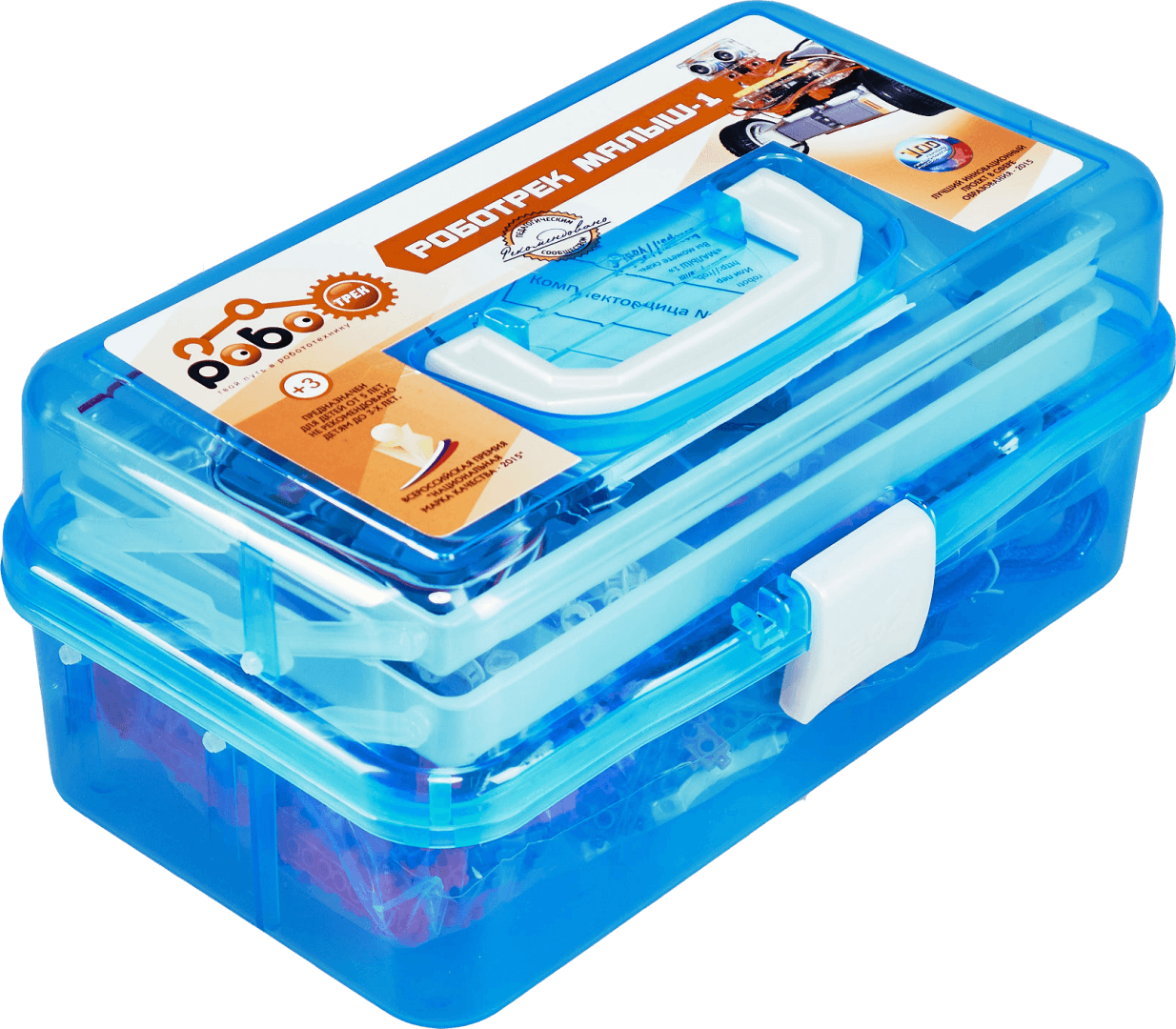
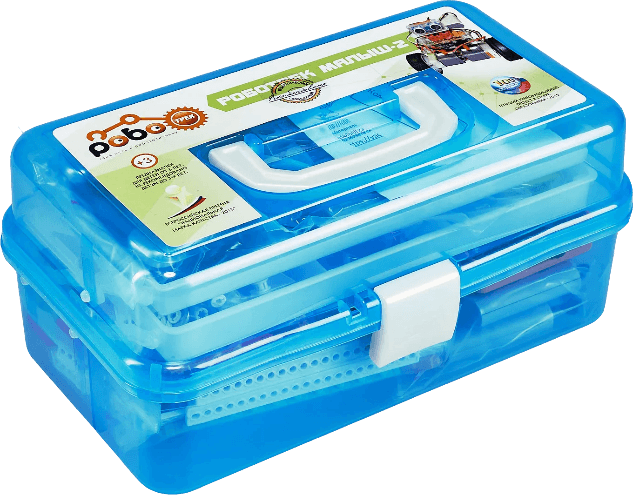
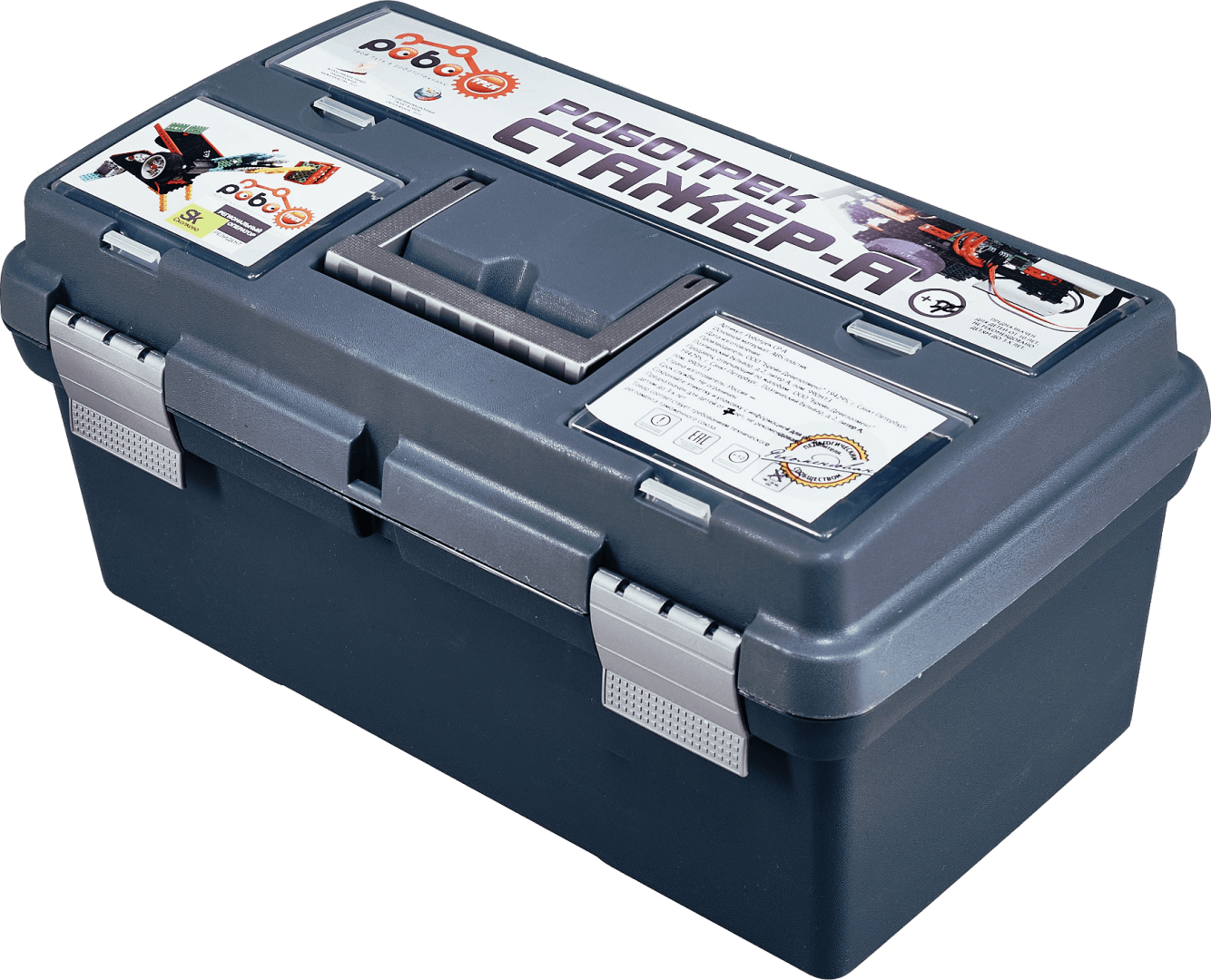
Educational equipment and teaching package: Malysh-1 and Malysh-2 robotics kits; Robotrack Stazher A kit with the Introduction to Mechatronics course; the Mechanics resource kit; and the Entertaining Mechanics course.
Продукция
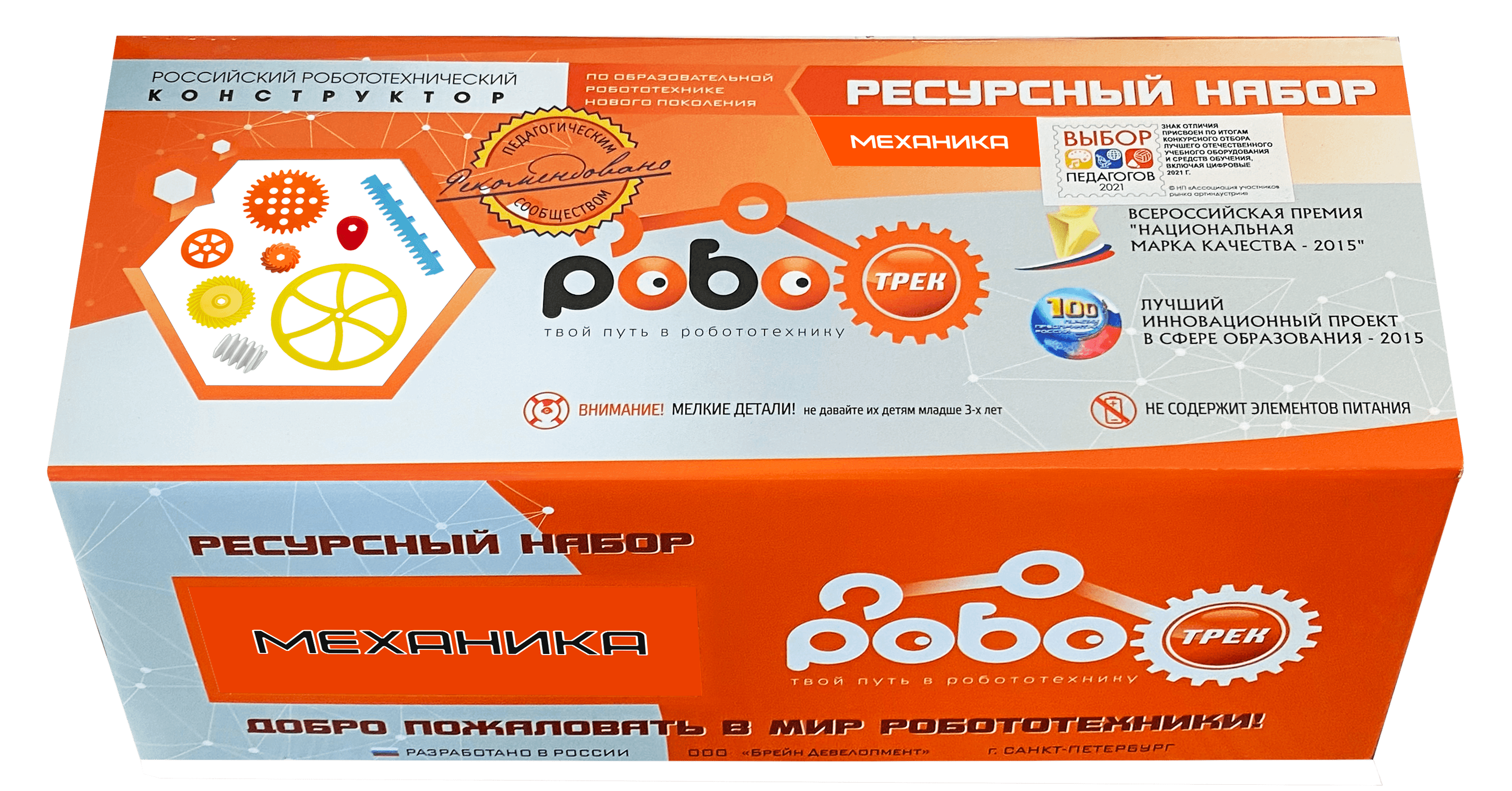
Mechanics resource kit
Neurotechnology
Pupils are introduced to cognitive science and key processes involved in human thinking, including memory, attention, perception, and imagination. Through activities and games, they explore fields within cognitive science: neuroscience, linguistics, artificial intelligence, epistemology, and cognitive ethology—the study of animals' mental abilities.
They also learn how sensors can measure brain biosignals and how those signals can control technical devices. Simple brain-computer interface principles offer an introduction to modern ways people and machines interact.
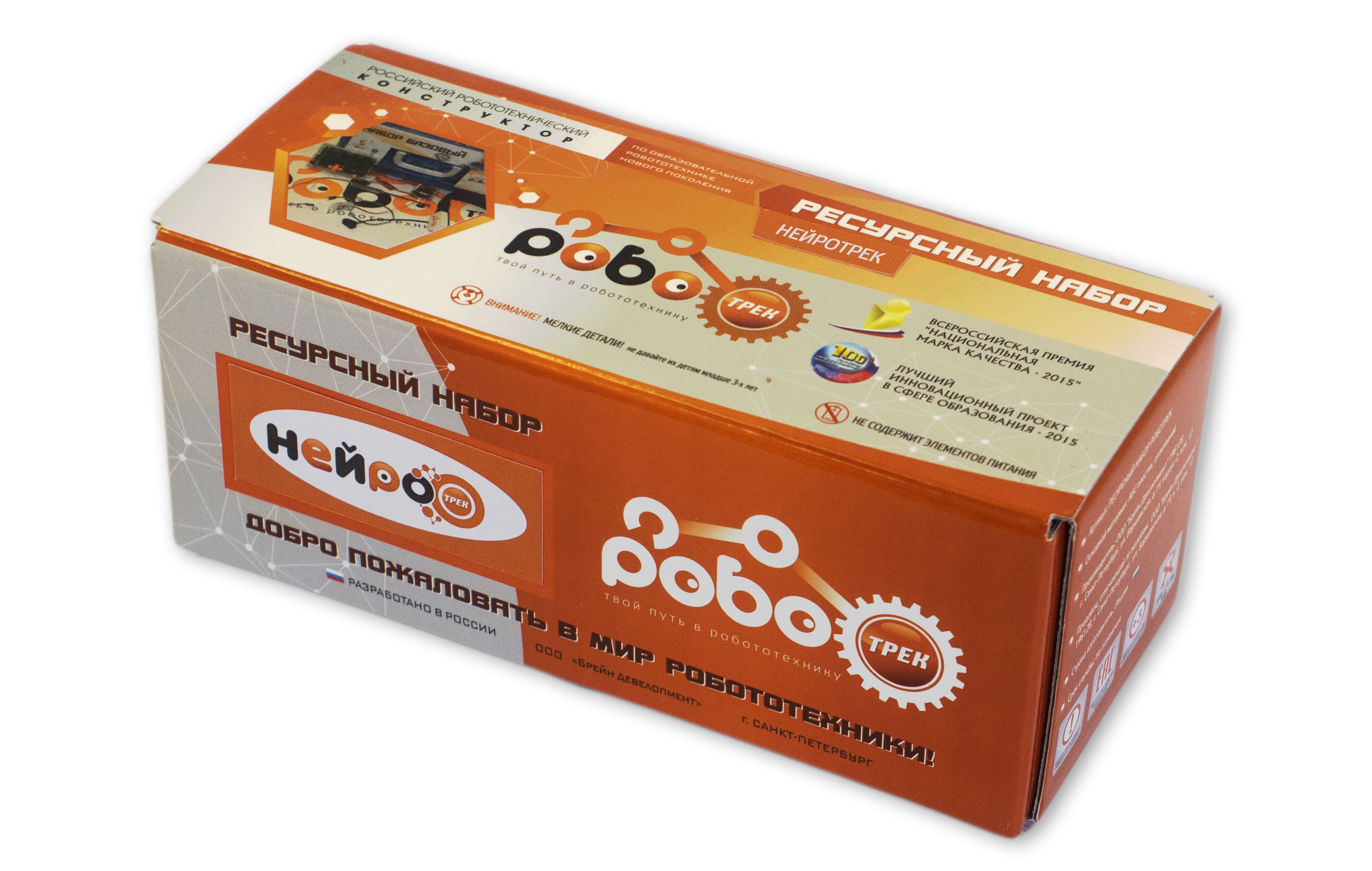
Educational equipment and teaching package: Robotrack Stazher A robotics kit; Neurotrek neurotechnology resource kit; and the Introduction to Cognitive Science course.
Electrical engineering
Play-based lessons introduce primary school pupils to electricity, electronics, and circuit design. They assemble simple circuits on a safe solder-free workbench and use basic components such as resistors, capacitors, and transistors, presented as friendly characters. Pupils connect LEDs to make circuits such as a blinking holiday garland, experiment with a breadboard and additional devices, and explore electricity and electromagnetic fields in practice. They finish with foundational knowledge of circuits and the ability to create their own projects.
Educational equipment: Electronics for Young Geniuses, a play-based kit for learning the fundamentals of electricity, electronics, and electrical engineering.
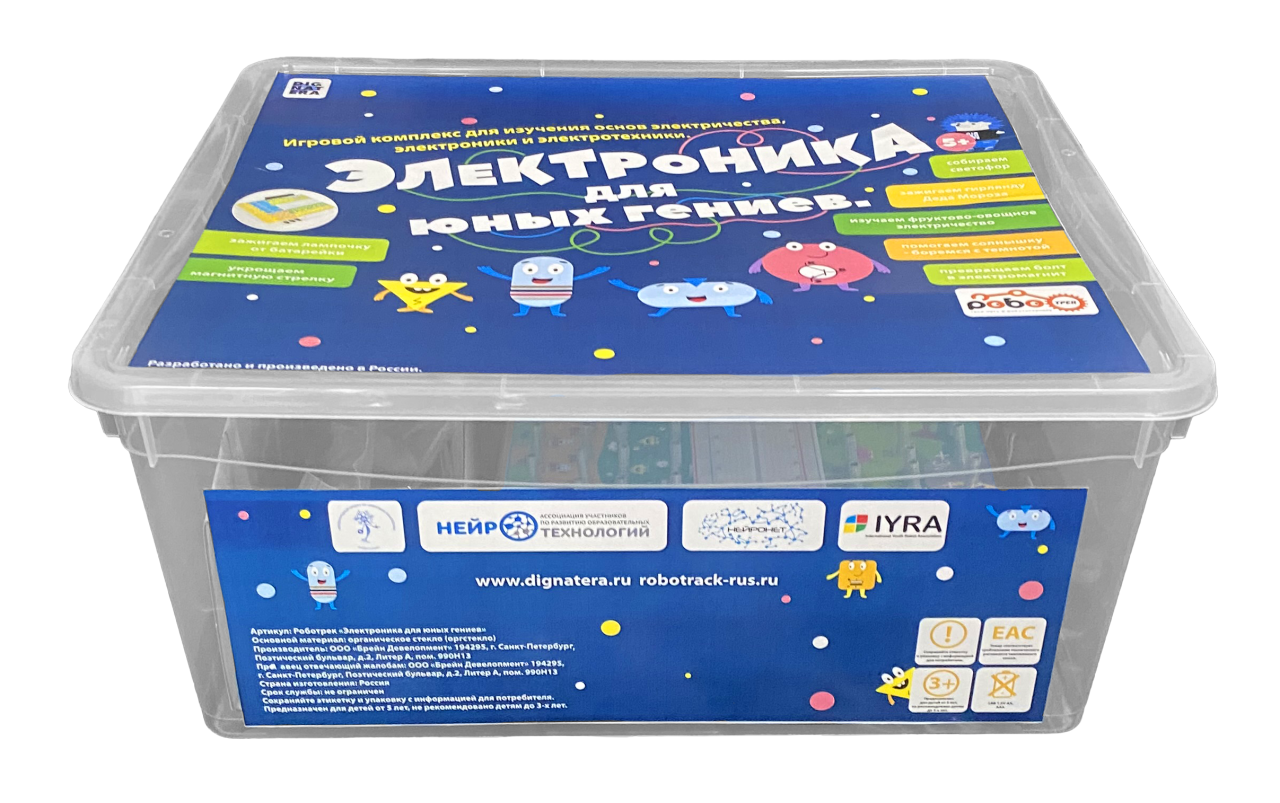 Educational laboratoriesElectronics for Young Geniuses Learning KitLearn more
Mechatronics
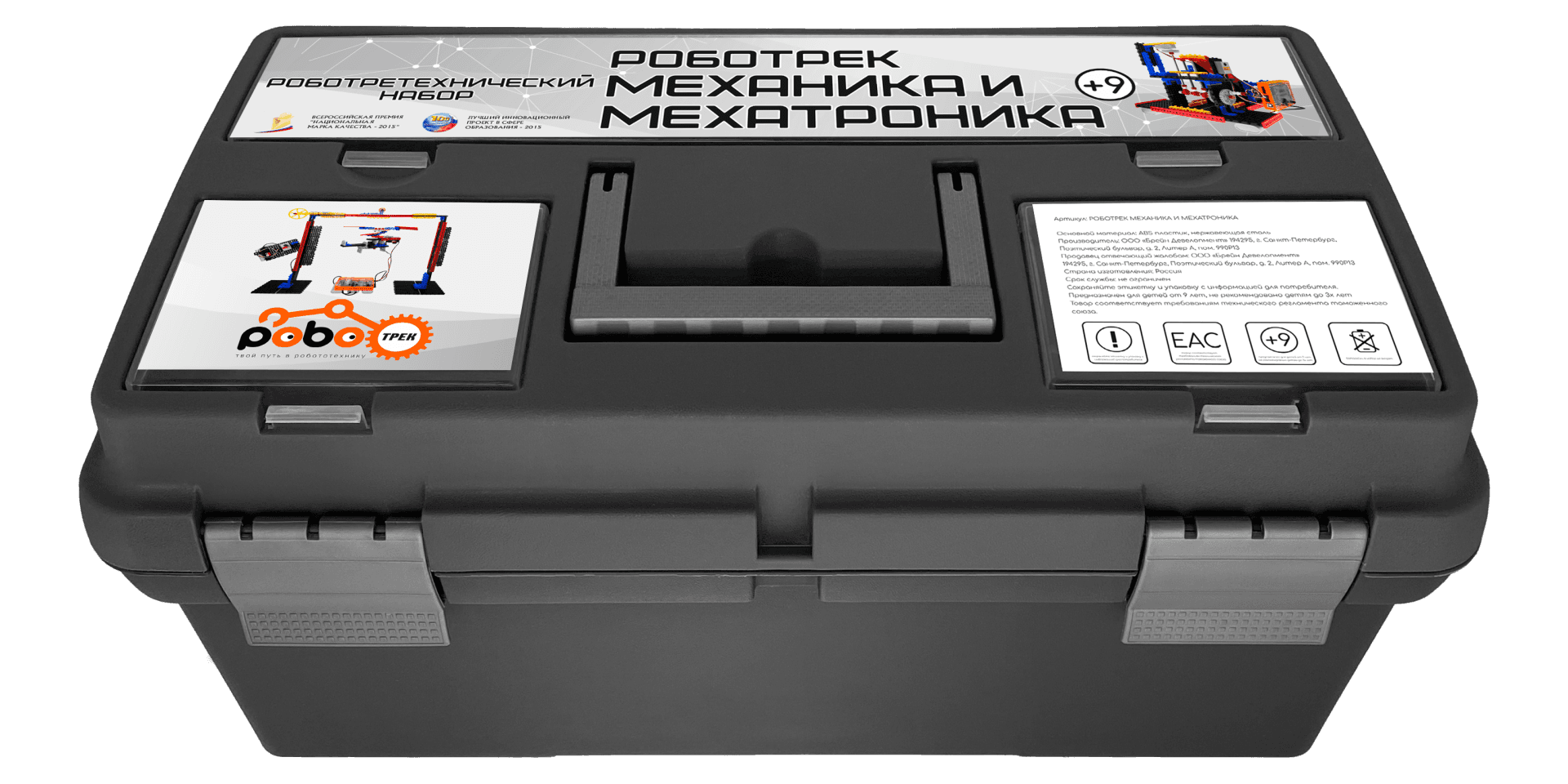
Pupils learn how mechanical and electronic parts work together in a device. They explore mechanisms, connect them to controllers and sensors, and use them to solve practical problems, including simple automation. Hands-on activities cover gears, levers, drives, and other mechanical assemblies, how motion is transmitted, and how electronics can control mechanisms. The lessons help pupils trace how one action causes another in a system of interacting parts. For example, a crank-and-slotted-lever mechanism can be explained through the familiar concept of a third-class lever.
Educational equipment and teaching package: Stazher A with Introduction to Mechatronics; the Mechanics resource kit; the Robotrack Mechanics and Mechatronics kit; and the Entertaining Mechanics course.
Продукция
Mechanics resource kit
Programming
Programming is taught through games and accessible activities in Scratch. Pupils learn to create algorithms and simple programs for controlling models and solve tasks inspired by competitive robotics, including sorting and classifying objects. Block-based environments let children build programmes without writing code by hand, understand an algorithm's structure, and see the result of their work.
Teaching package: a visual programming course using Scratch.
 Teaching and learning setsScratch Visual Programming CourseLearn more
Artificial intelligence
Trekikod is a programming environment for learning and creating in robotics, automation, and AI. Pupils move from block-based programming to writing code and learn to work with controllers, sensors, and actuators. They can use ready-made neural networks for face and gesture recognition, age and gender estimation, and emotion and voice analysis. NNTrack activities let pupils build their own neural networks. The work develops creative thinking and prepares pupils to take on advanced technology projects.
Teaching package: Trekikod software.
 SoftwareTrackyCode Visual Programming SoftwareLearn more
Competitions
DETalka
The competition develops scientific, technical, and engineering thinking and encourages schoolchildren, preschool children, and children with disabilities to consider technology-focused careers.
International IYRC competitions
Brain Development LLC and Robotrack LLC organise DETalka competitions in digital technology, educational robotics, and neurotechnology. They are also authorised representatives of IYRA and IYRC in Russia and the CIS countries.

Ikaryonok
An all-Russian competition for preschool children that introduces them to engineering, develops intellectual and creative potential, and builds leadership and communication skills. It is part of the From Kindergarten to Production programme.

Neurofest
An all-Russian neurotechnology festival for schoolchildren interested in the brain, artificial intelligence, brain-computer interfaces, and cognitive research.
Children may also take part in robotics competitions that do not restrict brands, including competitions that allow Arduino-compatible boards.
Products in this area
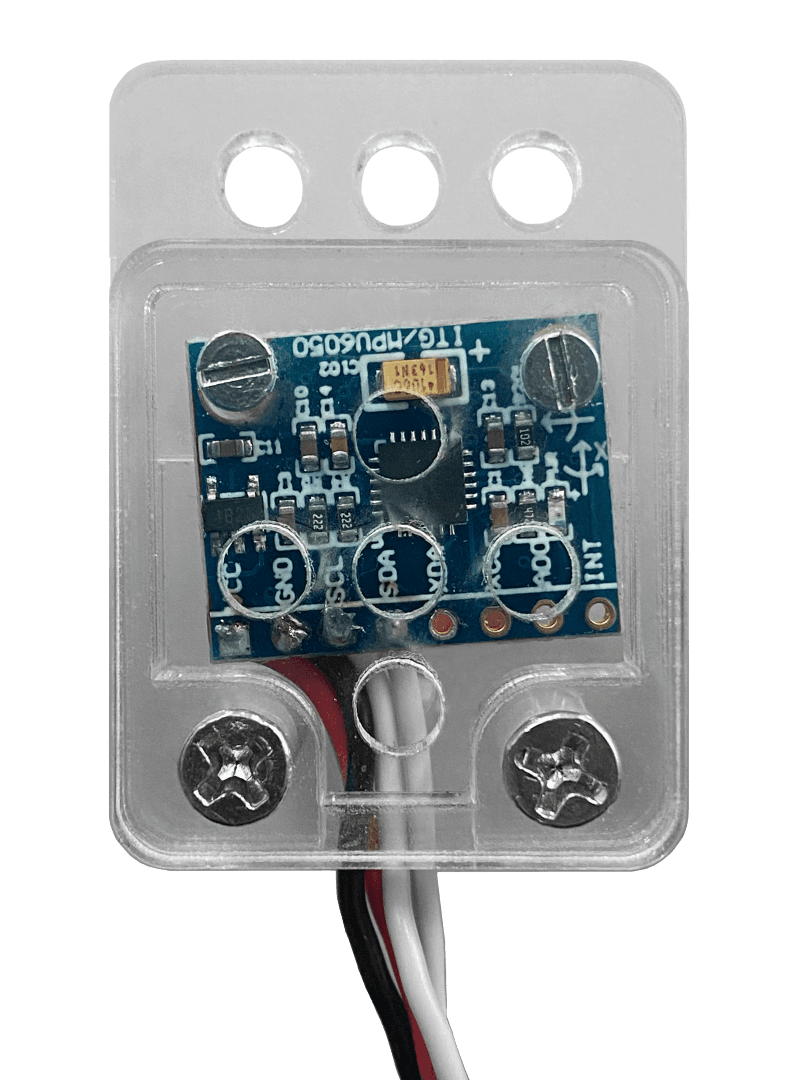
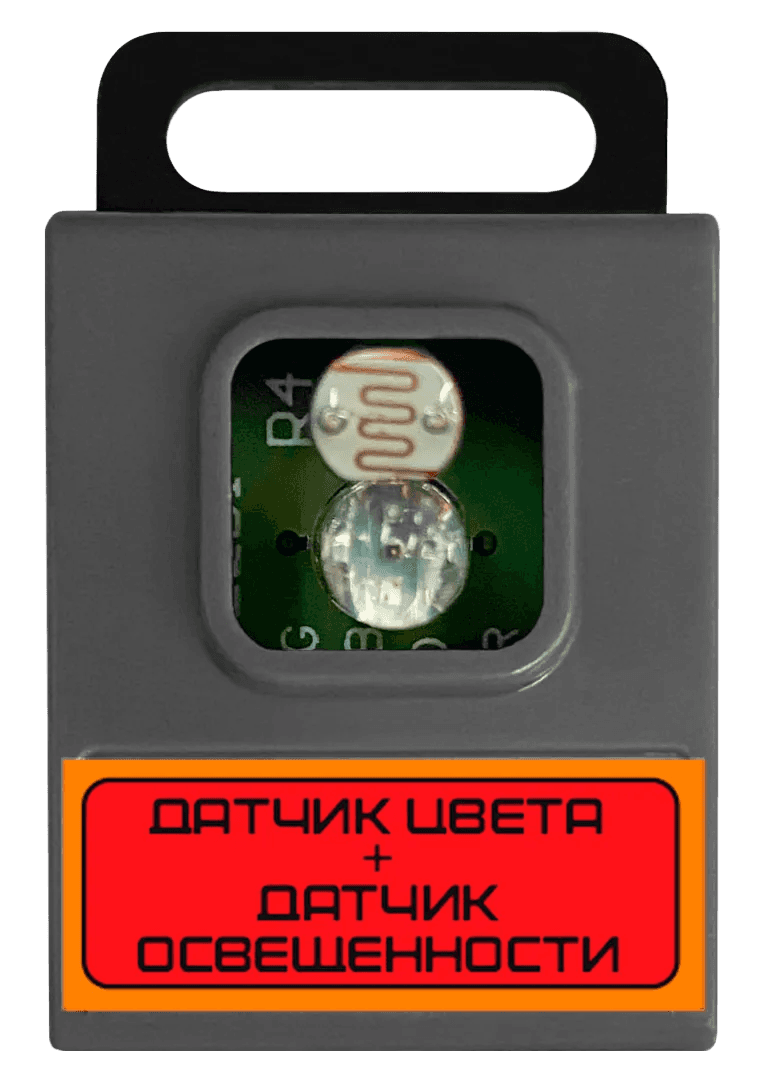
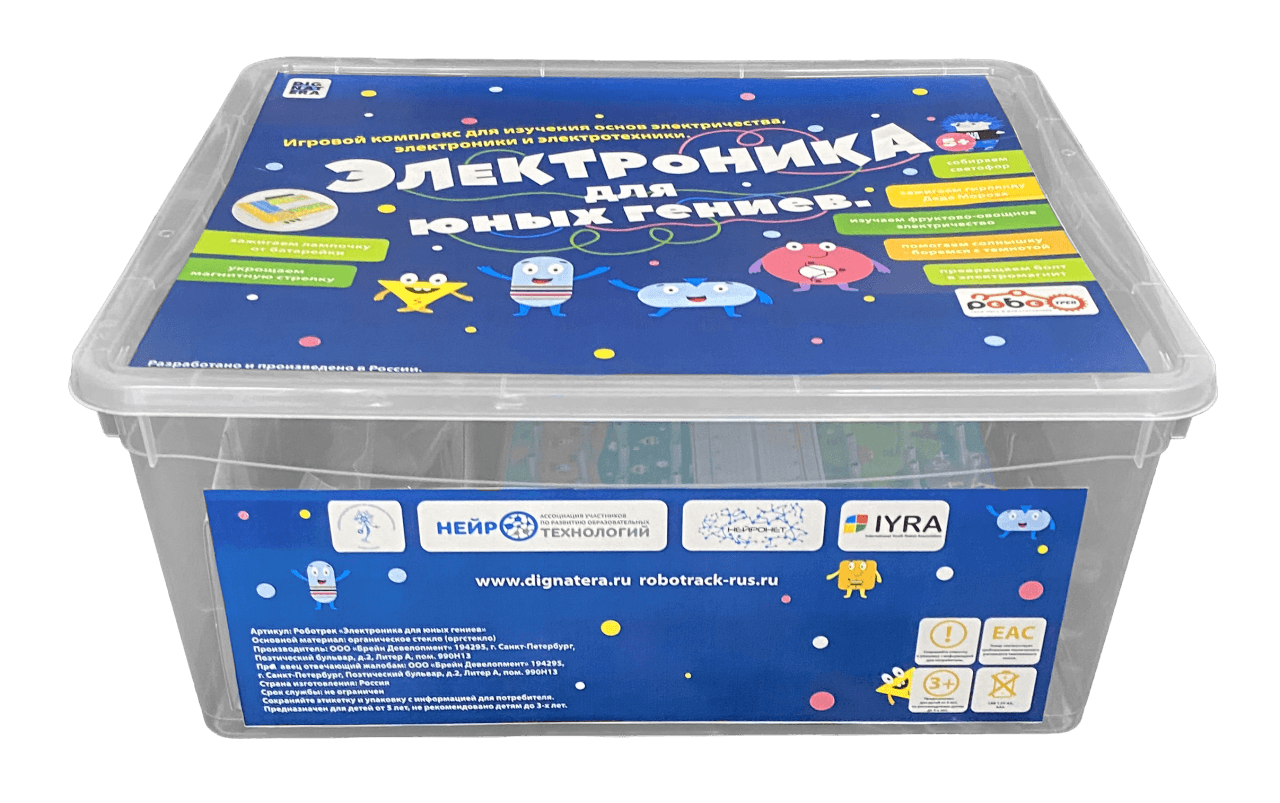
Teaching and learning sets
Fundamentals of Designing and Programming Robotic Devices: Introductory Course
Learn moreTeaching and learning sets
Fundamentals of Electrical Engineering, Electronics, and Electricity Course
Learn more